

By KEVIN BERGER, Local Journalism Initiative
Improper snow and ice removal, damaged sidewalks and missing curb ramps, and communication from the city itself sometimes being difficult to understand are among the chief concerns slated to be addressed over the next three years through the new Martensville Accessibility Plan.
City of Martensville councillors approved the new 2026-2029 Accessibility Plan during a special council meeting on Tuesday, December 2.
Notably, this was one day before the December 3, 2025 deadline established under The Accessible Saskatchewan Act for Martensville and other municipalities to have their plan ready.
The purpose of this act, which was passed in 2023, was to remove and prevent accessibility barriers faced by people with disabilities, acknowledging that roughly 29.8% of Saskatchewan’s population identified as having a disability in 2022.
Despite that provincially mandated deadline, Director of Recreation and Planning Roxane Melnyk said the plan does not have to be submitted to or approved by the Saskatchewan government.
The City of Martensville Accessibility Plan was developed in partnership with the Martensville Accessibility Advisory Committee (MAAC), which was made up of individuals with disabilities, their caregivers and other members of the public.
Council originally approved the terms of reference for this committee back in August and the appointment of its members in October.
Melnyk indicated the MAAC met to discuss the accessibility challenges they personally face and those experienced by residents they know in the community.
“However, the group acknowledged that they may not have experienced all barriers, so they wanted to go out to the residents and hear directly from them,” Melnyk said.
As a result, a community survey was conducted from October 27 to November 6, with a total of 118 responses being received from individuals with disabilities, family members of disabled individuals and organizations that work with the disabled.
Nearly 50 respondents in the survey highlighted snow and ice removal as a major concern, as several noted that when sidewalks and crosswalks are not cleared properly, they are unable to leave their homes and are left feeling isolated.
Sidewalk and pedestrian infrastructure was also a major theme, as respondents indicated that uneven surfaces on sidewalks and parking lots and a lack of connectivity made it hard for them to move around safely and independently.
Some respondents indicated the public buildings and recreational facilities in the city are not always accessible, and sometimes communication from the city via the website, social media and council meetings can be hard to comprehend.
Finally, respondents indicated the need for increased education and awareness of all disabilities.
However, the plan doesn’t just identify problems, but also spells out solutions. In regards to infrastructure, these include performing a sidewalk audit along major routes, initiating an accessibility audit of parks and public-facing facilities, and reviewing the Design Standards Manual to incorporate accessibility standards into said manual.
Regarding the issues identified with transportation and mobility, the plan recommends reviewing crosswalk signals at high-traffic intersections, a consultation to determine if winter sidewalk maintenance can be improved in certain key areas, and incorporating accessibility transportation into the Transportation Master Plan.
On the subject of communication barriers, the plan recommends updating the Accessible version of the city’s website, and putting more effort to ensure all public documents use accessible formats and plain language.
Other recommended actions within the plan include reviewing and conducting accessibility awareness training for city staff; partnering with local schools and engaging the community in disability awareness events; participating in public consultations on proposed amendments to the National Building Code of Canada and the Construction Code Act; reviewing the Recreation Membership and Program Access Policy; and integrating accessibility funding into the city’s Five Year Capital Improvement Plan.
Mayor Kent Muench asked Melnyk during the December 2 meeting what would happen to the advisory committee now that the plan is complete.
Melnyk indicated they still have to figure out the role of the committee moving forward and how often it has to meet, though the original terms of reference called for the MAAC to meet quarterly.
“I can’t see them sitting around waiting to get a call,” she said. “They’re a very passionate group of people and they’re very committed to this cause.”
Melnyk suggested the group will likely update city council in late 2026 about what aspects of the plan have been accomplished and recommend potential updates to the plan.
Noting that there were items in the plan with a cost attached, she suggested they could also be involved in securing grants.
Coun. Brad Blixt provided Melnyk with some minor suggestions, mostly around adjusting the document for plain language.
Despite those small changes, Muench indicated he was comfortable with approving the plan at that meeting.
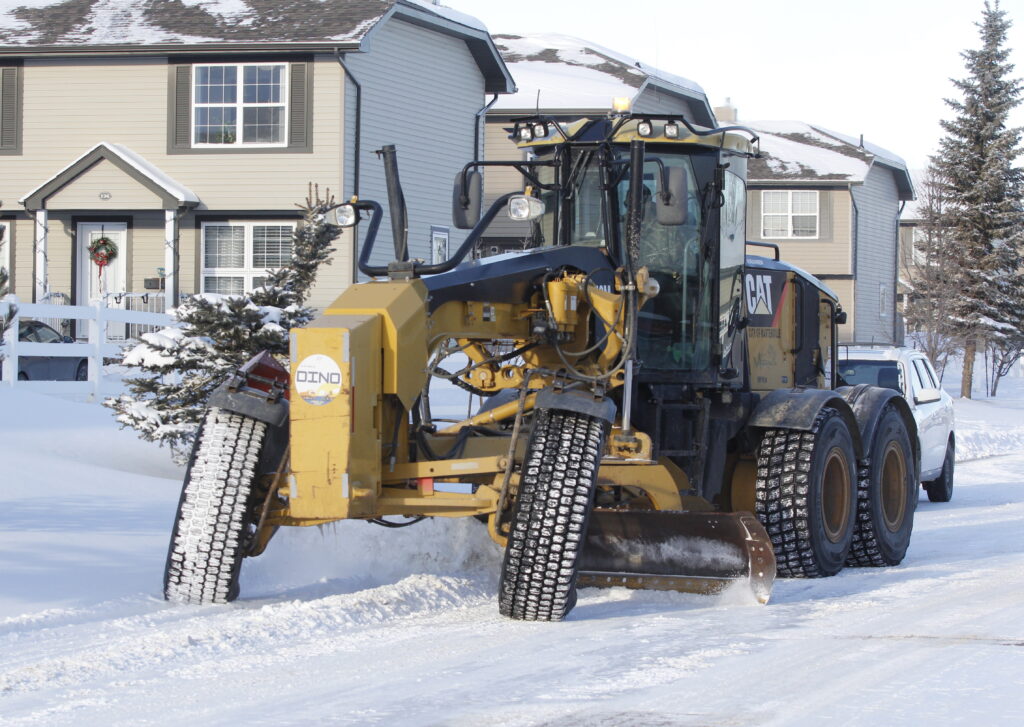
A snowplow pushes snow along 2nd Avenue in Martensville on Friday, December 12. Snow and ice removal was cited as a major barrier to accessibility within the 2026-2029 Martensville Accessibility Plan.